By Chelsea Vail, MA, Child Life Specialist & Newborn Care Specialist For generations, the familiar pink-and-blue striped receiving blanket has symbolized a baby’s first moments in the world. It’s iconic, comforting, and deeply woven into hospital tradition. But in modern newborn care, it’s worth asking: are these blankets truly designed with the newborn’s developmental and physiological needs in mind? Let’s take a closer look. Material Matters More Than We Think Most standard hospital receiving blankets are made from a cotton-polyester blend. This combination is chosen for durability, repeated industrial washing, and cost-effectiveness. Hospitals need materials that can withstand high heat, strong detergents, and constant reuse. But newborn skin is not the same as adult skin. A baby’s skin barrier is still developing. It’s thinner, more permeable, and more sensitive to friction, temperature changes, and residues. While polyester itself isn’t inherently harmful, synthetic blends can:
The Hidden Issue: Function Over Physiology Receiving blankets were never designed with developmental positioning in mind. They are flat, rectangular, and uniform. But newborns are not. Babies are born with a natural flexion pattern—curled limbs, rounded spine, and a need for containment. When loosely wrapped in a standard blanket, they often lose that sense of secure, womb-like support. This can impact:
What About Chemical Exposure? There’s a growing conversation among parents about chemicals in fabrics—and it’s good to be informed. Hospital textiles are heavily processed to meet hygiene and safety standards. This includes:
Some parents, and medical professionals, prefer to minimize any potential exposure by choosing:
Moving Toward Developmentally Supportive Care The real opportunity isn’t fear—it’s innovation. When we design new products for newborns, we consider:
A Gentle Shift in Perspective The striped receiving blanket isn’t “bad.” It’s simply outdated. It was created for a different era—one focused on practicality over developmental science. Today, we have the knowledge to do better. And when we know better, we can design better. Reach out to your Sales Representative at International Biomedical [email protected] to make the switch to the Woombie Sleepy Pod for NICU and Well-baby nursery. For our smallest patients, even the simplest changes can make a meaningful difference. As a neonatologist, my work is grounded in one simple principle: the developing infant brain and body are exquisitely sensitive to environment, positioning, and sensory input. The first months of life are not a time to optimize convenience or automation—they are a time to protect and support natural developmental processes that have been refined over millennia.
In recent years, I’ve observed growing enthusiasm for highly engineered infant sleep devices that promise longer stretches of rest through restrictive swaddling (arms strapped down and binded with additional straps not unlike a papoose) and automated motion. While these innovations are often marketed as “gentle,” or “developmentally supportive,” a closer look through a medical lens raises important concerns. The Problem with Restrictive Squared BottomHealthy hip development in newborns depends on freedom of movement, particularly the ability to flex and abduct the legs. The ideal resting posture resembles a natural “froggy” or “peanut” shape—hips flexed, knees apart, with space for spontaneous motion. Devices that enforce a narrow, squared-off lower body position may inadvertently limit baby's natural posture. When the legs are held in a more extended or constrained alignment, we begin to move away from what pediatric orthopedics recognizes as optimal for hip joint formation. Over time, restriction—especially when prolonged during sleep—can contribute to improper joint alignment and increase the risk of developmental hip concerns. By contrast, swaddling approaches that allow a tapered, flexible lower portion better respect the infant’s anatomical needs. The distinction may seem subtle, but in early development, small positional differences matter. This is why the Woombie Sleepy Pod and Woombie swaddles feature a patented peanut-shape for healthy shoulders and hips. Motion: Soothing vs. ConditioningThere is no question that rhythmic motion can calm a newborn. We see this in caregiver rocking, holding, and walking—forms of movement that are responsive, variable, and biologically attuned. Automated cradles, however, introduce a different kind of stimulus: continuous, machine-driven motion that does not adapt in the same nuanced way as human caregiving and comfort. Even when described as “gentle,” this repeated mechanical movement raises two concerns:
Newborn sleep is not meant to be uninterrupted, silent, or mechanically optimized. It is cyclical, active, and deeply connected to feeding, bonding, and neurological growth. Devices that intervene too aggressively—by restricting movement or automating soothing—can unintentionally counteract the very processes they aim to improve. Developmentally appropriate care prioritizes:
When we step back and ask what a baby truly needs, the answer is rarely complex: space to move, a stable environment, and the steady presence of a caregiver—not a machine. I highly recommend the Woombie Sleepy Pod for Mother/Baby Unit at birth and for the fourth trimester at home. Should baby need treatment for jaundice, the Woombie Bili Pod is best! By a Mother-Baby Nurse In the mother–baby unit, the first hours and days of a newborn’s life are critical. Nurses carefully monitor feeding, breathing, thermoregulation, neurologic adaptation, and safe sleep. One of the simplest—but most important—decisions we make in the nursery is how we position and wrap infants during sleep. For decades, hospitals relied on traditional receiving blankets to swaddle newborns. While the intent is comfort and warmth, blanket swaddling introduces variability and risk. As safe-sleep science has evolved, many clinicians now recognize that wearable sleep garments provide a safer, more developmentally appropriate solution. Among these, the Woombie Sleepy Pod represents a design that aligns well with hospital priorities: safety, physiologic regulation, developmental care, and ease of use. The Problem with Traditional Blanket Swaddling in HospitalsBlanket swaddling relies entirely on staff technique. Even skilled nurses may wrap infants differently from shift to shift. When blankets loosen, they can migrate upward toward the face. Clinical guidance notes that if a swaddle blanket is too loose, it can unravel and create suffocation hazards; if it is too tight, it can restrict breathing or impair hip development. () Loose bedding also increases the risk of overheating and airway obstruction—two known contributors to sleep-related infant deaths. () These risks are exactly why many safe-sleep policies emphasize eliminating loose items in the bassinet whenever possible. A wearable swaddle garment eliminates these variables. Why the Woombie Sleepy Pod Works Well in the Hospital SettingThe Woombie Sleepy Pod addresses several clinical concerns simultaneously. 1. Eliminates Loose FabricUnlike blankets, the Woombie is a zip-up pod design that cannot unravel during sleep. This prevents loose fabric from covering the infant’s airway—one of the most common hazards associated with blanket swaddling. () For nurses caring for multiple newborns simultaneously, this design dramatically reduces the risk of unsafe bedding. 2. Supports Developmental CareDevelopmentally supportive care recognizes that newborns benefit from gentle containment that mimics the womb without restricting natural movement. The Woombie uses stretch fabric that allows babies to softly move their arms and legs, promoting natural motor development and midline movement rather than pinning the arms rigidly to the sides. () This approach supports:
3. Improves ThermoregulationThermoregulation is a major responsibility in the newborn nursery. Babies lose heat rapidly and are vulnerable to both hypothermia and overheating. Traditional blankets often lead to over-wrapping, which can contribute to overheating—recognized as a risk factor in sleep-related infant deaths. () The Woombie Sleepy Pod simplifies temperature management because:
4. Encourages Safe Back SleepingThe pod-style design supports supine positioning, which is the recommended sleep position for infants. () Because the garment stays in place, babies are less likely to have bedding migrate toward the face or neck. 5. Consistency for ParentsParents frequently leave the hospital unsure how to replicate the nurse’s swaddling technique. A wearable pod simplifies the transition home. Instead of teaching a complicated folding method, nurses can demonstrate a single step: zip the garment closed. This consistency improves safe-sleep practices after discharge. Evaluating Other Popular Swaddle Products: While several swaddles are marketed to parents, not all designs are ideal for hospital use. The loose fitting sleep sacks often donated to hospitals are widely used and has features that allow arms-in or arms-out positioning. However, certain product versions have faced safety recalls. In 2013, about 27,000 wearable blankets were recalled after decorative petals detached, posing a choking hazard to infants. () More recently, magic sleepsuits were recalled after zipper heads detached, again presenting a choking hazard. () Although these recalls applied to specific models, they highlight an important principle in newborn care: simpler designs often reduce risk. Additionally, the wrap-style wings on the sleep sacks can loosen over time, potentially allowing excess fabric to shift leading to accidental suffocation. The Shaken Baby swaddle: The swaddle that is meant to be used with a particular bassinet incorporates Velcro straps that attach the infant to the mattress. While the intention is to maintain a supine position, many clinicians question the concept of restraining an infant to the bassinet. Safe-sleep guidelines typically emphasize that infants should be able to move naturally and reposition their heads and bodies if needed. The associated soothing technique—vigorous rocking or shaking—can also be controversial when misapplied by inexperienced caregivers. In hospital settings focused on gentle developmental care, many clinicians prefer swaddles that provide containment without mechanical restraint. The swaddle that positions the baby’s arms UP beside the face. Some infants enjoy this position, but from a developmental standpoint it places the shoulders in external rotation for extended periods. For newborns adjusting to extra-uterine life, many clinicians prefer neutral or flexed positioning closer to midline. Additionally, the arms-up posture can increase the likelihood of the garment contacting the infant’s face. A Shift Toward Safer, Simpler Sleep in Hospitals Newborn care continues to evolve as research improves our understanding of safe sleep and early development. Hospitals are increasingly moving away from loose blankets and toward wearable sleep garments that provide:
For nurses caring for the newest members of our communities, small improvements in everyday practices can make a meaningful difference. Replacing blanket swaddling with safer wearable solutions like the Woombie Sleepy Pod in our patented Bebeflex™ fabric and patented peanut-shape that perfectly mimics the womb, is one of those improvements. And sometimes, the safest change is also the simplest one: zip, rest, and let babies sleep safely. Why the Woombie Bili Pod Is Transforming Developmental Care During Neonatal Phototherapy and NOWS Tx By Child Life Specialist and Co-creator, Chelsea Vail In neonatal medicine, we are constantly balancing two priorities: delivering effective clinical treatment while protecting the fragile neurodevelopment of the infant. Phototherapy for hyperbilirubinemia is one of the most common interventions we provide in NICUs, nurseries, and birth centers worldwide. Yet historically, phototherapy has required us to compromise developmental positioning, containment, and comfort in order to maximize skin exposure. That is why the Woombie Bili Pod represents, in my professional opinion, one of the most important advancements in neonatal developmental care in recent years. After integrating it into clinical practice, I can confidently say: this product should be considered best practice in every NICU, nursery, and birth centers worldwide. Closing the Gap Between Treatment and Developmental CareTraditional phototherapy often leaves infants unswaddled, exposed, and dysregulated. For preterm infants and babies with neonatal opioid withdrawal syndrome (NOWS), this can lead to:
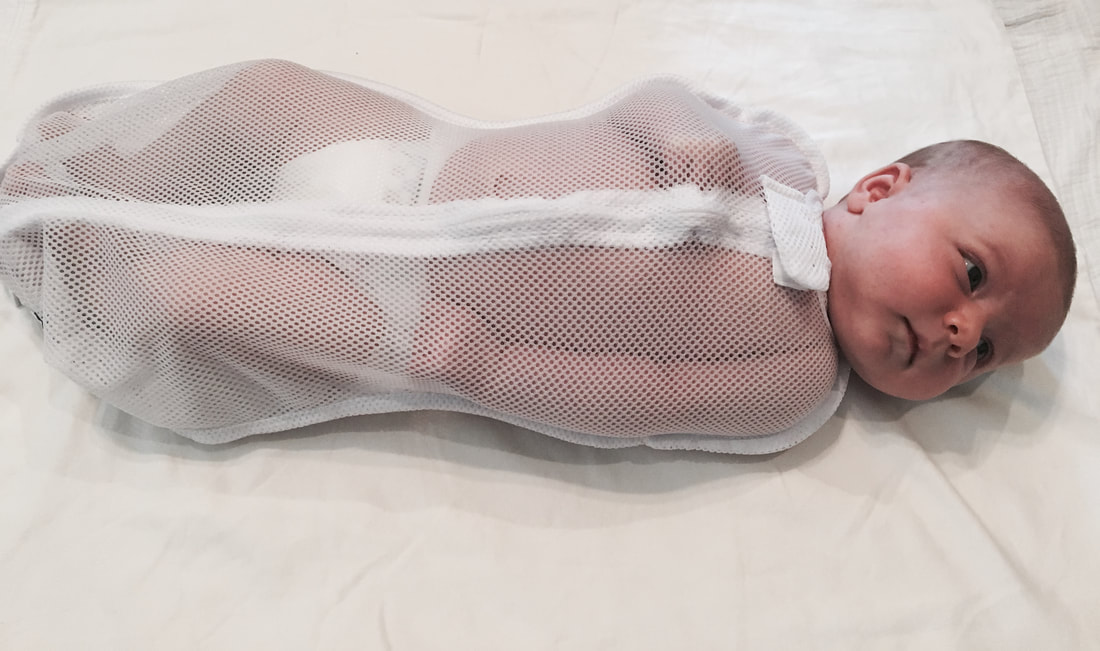
The design supports optimal light exposure while maintaining a womb-like, flexed, midline position — exactly what developmental care principles demand. Maximizing Luminosity Without Compromising SafetyOne of the most impressive features of the Woombie Bili Pod is its ability to allow exceptionally high luminosity during phototherapy. In my experience, it outperforms other containment products on the market in terms of light transmission while still providing developmental support. The specialized mesh fabric allows light penetration across the infant’s body while minimizing shadowing. At the same time, the breathable material reduces the risk of overheating — a critical consideration during phototherapy, particularly in preterm or medically fragile infants. The balance is elegant:
The Double Zipper: A Clinician’s DreamIf you have worked in a NICU, you understand how often we need access — quickly and safely. The Woombie Bili Pod’s double zipper design is a deceptively simple but transformative feature. It allows:
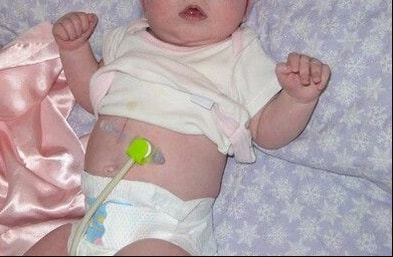
For nurses and respiratory therapists, this translates into workflow efficiency. For babies, it translates into physiologic stability. Snap Option for Umbilical IV AccessFor our smallest and sickest patients, umbilical lines are common. One of the reasons many developmental products fail in the NICU setting is incompatibility with central access devices. The Woombie Bili Pod addresses this directly with a snap configuration option specifically designed for infants with umbilical IV lines. This thoughtful feature allows safe line management without compromising containment or light exposure. It is clear this product was designed with real NICU realities in mind. A Powerful Tool for NOWS and Withdrawal CarePerhaps one of the most exciting applications is its role in caring for infants experiencing Neonatal Opioid Withdrawal Syndrome (NOWS). These infants often struggle with:
Because the fabric is breathable mesh, it avoids the overheating risk that sometimes accompanies tighter swaddling during phototherapy. This makes it particularly well suited for babies who require both bilirubin treatment and withdrawal support simultaneously. In my clinical view, it functions not just as a phototherapy garment, but as a neuroregulation tool. Infection Control and Cost PracticalityAnother major advantage is its flexibility in use. The Woombie Bili Pod can be:
Why This Should Be Standard of CareDevelopmental care is no longer optional in modern neonatology — it is evidence-based medicine. We know that positioning, containment, sensory regulation, and sleep protection influence:
Instead of choosing between bilirubin reduction and developmental integrity, we can now achieve both. That is why I believe this product deserves consideration as a new global best practice for phototherapy management. A Shift in MindsetFor decades, neonatal care has evolved from survival-focused to developmentally intentional. The next frontier is ensuring that every intervention — even routine ones like phototherapy — supports long-term neurodevelopment. The Woombie Bili Pod is not just a swaddle. It is a bridge between treatment and tenderness. Between technology and human-centered care. As infant care specialists, we have a responsibility to implement solutions that protect not just life, but lifelong potential. In my practice, this is one of them. |
AuthorChelsea Vail, MA, CCLS, Newborn Care Specialist and contributing inventor of Woombie Med Pods. Archives
April 2026
AuthorWrite something about yourself. No need to be fancy, just an overview. Categories |


RSS Feed